Myopia Control: What Every Parent Should Know to Protect Their Child’s Vision in 2026
Eye Care, We Care – Care Optics

As parents, we want to give our children every possible advantage—from a great education to a healthy diet and a safe environment. But one thing that often gets overlooked is the long-term health of their eyes.
In 2026, Myopia—commonly known as short-sightedness—is more than just a vision quirk; it is a global health priority. At Care Optics, we specialise in Myopia Control, helping children across our communities maintain clearer vision today and a healthier, brighter future tomorrow.
In this guide, we explore what Myopia is, the latest 2026 trends, and the groundbreaking ways we can help manage and slow its progression.
What Is Myopia?
Myopia is a refractive error that causes distant objects to appear blurry, while close-up vision remains clear. It occurs when the eyeball grows too long from front to back (known as axial elongation), or when the cornea is too curved. As a result, light entering the eye focuses in front of the retina instead of directly on it.
It usually begins in primary school and tends to worsen as the child grows. By 2026, the prevalence of myopia in the UK has reached an all-time high, with experts attributing the "epidemic" to a combination of genetics and our modern, screen-heavy lifestyles.
Signs Your Child May Have Myopia
Children rarely complain about their vision because they assume the way they see is how everyone else sees. As a parent, you are the first line of defence. Look out for these "red flags":
- Squinting: Especially when looking at the TV or the whiteboard at school.
- Physical Proximity: Sitting very close to screens or holding books right up to their face.
- Physical Fatigue: Frequent eye rubbing, complaints of headaches, or appearing unusually tired after school.
- Academic Changes: Falling behind in class or appearing disengaged because they cannot see the teacher's notes clearly.
If you have noticed any of these, a professional eye test is the essential next step.
Why Controlling Myopia Matters
A common misconception is that Myopia is just a "prescription problem" that glasses can fix. While standard glasses help a child see clearly, they do not stop the eye from continuing to grow too long.
Uncontrolled Myopia can lead to serious, sight-threatening issues later in life. As the eye stretches, the internal tissues become dangerously thin. This significantly increases the risk of:
- Retinal Detachment: The risk is up to 21 times higher for those with high myopia.
- Glaucoma: Structural changes in the eye increase the risk of optic nerve damage.
- Myopic Maculopathy: Now a leading cause of irreversible vision loss in adults.
- Early-Onset Cataracts: Occurring much earlier in life than in those with normal vision.
Myopia Control is about disease prevention, not just vision correction.
What Is Myopia Control?
At Care Optics, our Myopia Management programme is a proactive, clinical approach designed to slow down the elongation of the eye. By 2026, the technology available to us has never been more effective.
1. MiSight® 1 Day Contact Lenses
These are the first soft contact lenses clinically proven and FDA-cleared to slow the progression of myopia in children. They use "dual-focus" technology: one zone corrects the vision, while another creates a signal that tells the eye to stop growing. In long-term 2026 studies, they have shown incredible success in keeping prescriptions within a safer range.
2. Orthokeratology (Ortho-K)
Often called "overnight lenses," Ortho-K involves wearing specially designed lenses only while sleeping. They gently reshape the cornea overnight so that your child can see perfectly the next day without any glasses or contacts. This is a favourite for active children who enjoy swimming or sports.
3. Advanced Myopia Control Spectacles
For children who prefer glasses, 2026 has brought us revolutionary lens designs (like Essilor Stellest or Hoya MiYOSMART). These look like regular spectacles but use "lenslet" technology to manage the way light hits the peripheral retina, effectively putting the "brakes" on eye growth.
4. Lifestyle Recommendations
Technology works best when paired with healthy habits. We guide families on:
The 90-Minute Rule: Aiming for at least 90 minutes of outdoor time daily to trigger natural "stop growth" signals in the eye.
The 20-20-20 Rule: Every 20 minutes, look at something 20 feet away for 20 seconds to reduce "near-work" strain.
When Should Children Be Checked?
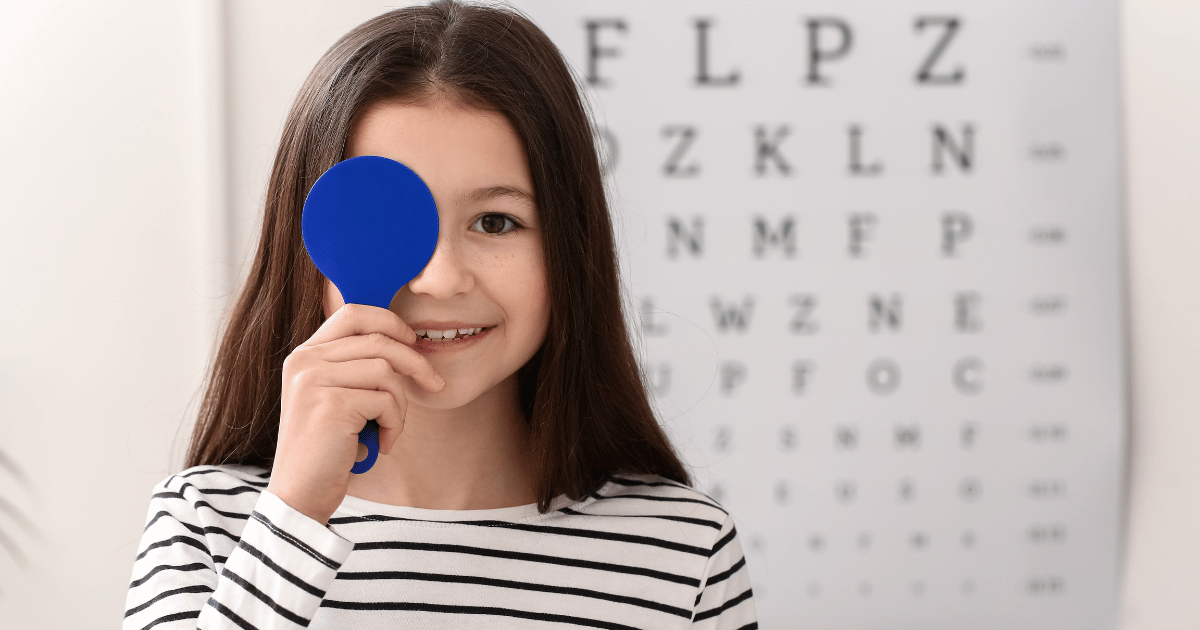
We recommend a comprehensive eye exam at age 4 or 5, before they start school. However, if there is a family history of short-sightedness, we suggest an assessment even earlier.
At Care Optics, we use state-of-the-art diagnostic equipment to measure axial length (the physical length of the eye). This is the gold standard in 2026 for tracking myopia progression and ensuring our treatment plan is working.
Can Myopia Be Cured?
Currently, there is no cure for Myopia, but it can be managed. Our goal is to slow or stabilise the condition so that your child’s vision doesn’t worsen more than it has to.
This can make a massive difference over time. A child who progresses to -6.00 diopters (a high degree of Myopia) is significantly more at risk for eye diseases than a child whose Myopia is controlled and remains around -2.00 diopters.
Common Myths About Myopia
Let’s clear up a few misconceptions:
"Glasses make eyes lazy": Totally false. In fact, under-correcting myopia can actually make it progress faster.
"My child doesn't complain, so they are fine": Most children with myopia believe their blurry vision is normal. Annual exams are the only way to be sure.
"It’s just genetics": While genetics matter, environmental changes (like more time outdoors) can significantly alter your child's visual future.
Why Choose Care Optics?
At Care Optics, we truly live by our slogan: Eye Care, We Care. We understand that we aren't just looking after a pair of eyes—we are looking after a child’s future.
Our experienced optometrists combine a warm, supportive environment with the most advanced diagnostic tools available in the UK today. We don’t just hand out glasses; we partner with you to preserve your child’s long-term eye health.
Get in Touch – We’re Here to Help
If you’ve noticed your child squinting, rubbing their eyes, or struggling to see distant objects, don’t wait. Early action is key in slowing Myopia.
You can Call, fill out a form and find out where our branches are here:
https://www.careoptics.co.uk/contact-us
At Care Optics, your family’s vision is our mission. Let’s work together to protect it—because eye care is caring.